After about a month of hibernation due to some extremely cold weather I decided to go to Seoul this past Saturday and check out N Seoul Tower. It was actually a lot milder in Seoul then it has been lately as it actually climbed above 0 degrees Celsius.N Seoul Tower is located on Namsan (South Mountain) which is not quite as high as some of the other mountains surrounding Seoul it was still an important site for defending Seoul.
After taking the cable car ride up Namsan one of the first places you'll see as you make your way to N Seoul Tower is Bongwadae (Beacon Mound). In the above pictures you can see five beacons which were used to transmit signals from the outskirts of the city to the government in downtown Seoul. During the Joseon period the beacons were used to relay warnings across the land. One flame lit meant that all was well while up to five were lit to signify varying degrees of unrest which were relayed by chains of beacons that stretched across the peninsula.
N Seoul Tower has five levels to the upper section which are home to a viewing platform and assorted cafes and restaurants. You can get great views of Seoul from the tower when there isn't any smog or yellow dust from China but unforunately Saturday was not a particularly clear day as you can see from the above pictures.
In the basement of N Seoul Tower there is a huge Teddy Bear Museum divided into two distinct and separte sections with one exhibition hall represting the past tracing the history of Hanyang of the Joseon Dynasty to modern-day Seoul while the second exhibition hall has interesting facets of modern Seoul from Apgujeong to Samcheong. I've included some of the pictures of the Teddy Bear Museum above while the rest of the pictures of the Teddy Bear Museum and N Seoul Tower can be found on Facebook.
CHOENAN DUDE
Sunday, January 8, 2012
Monday, December 5, 2011
Incheon
Incheon is an important port and Korea's third most populous city behind Seoul and Busan respectively. It is home of the country's main international airport and ferry terminal. I ventured there this past Sunday and went to three different places- Jayu Park, China Town, and Wolmi Park.
Jayu Park was the first Western style park built in Korea. Jayu(Freedom) Park borders the older areas of the city. It was originally called Manguk (All Nations) Park but its name was changed after General Douglas Macarthur's statue was erected here in 1957. Located here in Mount Eubong this is where he led the Incheon Amphibious Land Operation during the Korean War. The two pictures above are of the Macarthur statue.
Also in Jayu Park there is another interesting statue known as the Centenary of Korean-American Friendship Memorial Tower. A commercial treaty was concluded between the United States and the Joseon Dynasty 1882 which was the first international treaty signed by Korea and a Western country.The memorial tower was built to look back on the historical meaning and to continue the bilateral ties between Korea and the United States. The triangular-shaped tower looks up to the sky and at its center is a sculpture in the shape of two men standing shoulder to shoulder symbolizing friendship. Personally I don't actually see that in the sculpture but I'm not an artist! The above pictures are of the Memorial Tower. The rest of the pictures from Jayu Park can be found on Facebook.
Just below Jayu Park is China Town. The China Town has a long history dating back to 1884 symbolizing the multicultural aspect on Incheon. At first it was formed for the purpose of equipping the Chinese vessels shuttling to Incheon and selling of imported merchandise and later expanded into building stores and restaurants. Today it is home to more than 500 immigrants. The three pictures above are of Euisendong. It is unknown when it was built but it was a temple used to educate the Chinese. The Chinese characters in the name mean "uphold justice and practice virtue". It was also used for the purpose of martial arts training. The rest of the pictures of China Town can be found on Facebook.
The above two pictures are of the Centenary of Korean Christianity Memorial Tower which was built in 1985 in commemoration of the 100th anniversary of the arrival of a Methodist priest and a Presbyterian priest who landed in Incheon on April 5, 1885 and helped spread Christianity. The tower is 17 meters high and located a short distance from China Town.
The last place I visited on Sunday was Wolmi Park located on Wolmi island. Wolmi Park is a well preserved ecological park open to the public in 2001. It had been closed off to the public for 50 years due to it being located near a military camp.The park is also historically important because it was where the Incheon Landing Operation began during the Korean War. The top picture above is of Wolmi Observatory which is a 23 meter long three stories high which was built in 2005. The next two pictures are taken from the top of the Observatory overlooking Incheon and the bottom picture is of one of the two monstrous staircases I had to climb to reach the Observatory. It's supposed to be below 0 degrees Celsius all of next weekend so there might not be any new pictures next week. The rest of the pictures of Wolmi Park can be found on Facebook.
CHOENAN DUDE
Jayu Park was the first Western style park built in Korea. Jayu(Freedom) Park borders the older areas of the city. It was originally called Manguk (All Nations) Park but its name was changed after General Douglas Macarthur's statue was erected here in 1957. Located here in Mount Eubong this is where he led the Incheon Amphibious Land Operation during the Korean War. The two pictures above are of the Macarthur statue.
Also in Jayu Park there is another interesting statue known as the Centenary of Korean-American Friendship Memorial Tower. A commercial treaty was concluded between the United States and the Joseon Dynasty 1882 which was the first international treaty signed by Korea and a Western country.The memorial tower was built to look back on the historical meaning and to continue the bilateral ties between Korea and the United States. The triangular-shaped tower looks up to the sky and at its center is a sculpture in the shape of two men standing shoulder to shoulder symbolizing friendship. Personally I don't actually see that in the sculpture but I'm not an artist! The above pictures are of the Memorial Tower. The rest of the pictures from Jayu Park can be found on Facebook.
Just below Jayu Park is China Town. The China Town has a long history dating back to 1884 symbolizing the multicultural aspect on Incheon. At first it was formed for the purpose of equipping the Chinese vessels shuttling to Incheon and selling of imported merchandise and later expanded into building stores and restaurants. Today it is home to more than 500 immigrants. The three pictures above are of Euisendong. It is unknown when it was built but it was a temple used to educate the Chinese. The Chinese characters in the name mean "uphold justice and practice virtue". It was also used for the purpose of martial arts training. The rest of the pictures of China Town can be found on Facebook.
The above two pictures are of the Centenary of Korean Christianity Memorial Tower which was built in 1985 in commemoration of the 100th anniversary of the arrival of a Methodist priest and a Presbyterian priest who landed in Incheon on April 5, 1885 and helped spread Christianity. The tower is 17 meters high and located a short distance from China Town.
The last place I visited on Sunday was Wolmi Park located on Wolmi island. Wolmi Park is a well preserved ecological park open to the public in 2001. It had been closed off to the public for 50 years due to it being located near a military camp.The park is also historically important because it was where the Incheon Landing Operation began during the Korean War. The top picture above is of Wolmi Observatory which is a 23 meter long three stories high which was built in 2005. The next two pictures are taken from the top of the Observatory overlooking Incheon and the bottom picture is of one of the two monstrous staircases I had to climb to reach the Observatory. It's supposed to be below 0 degrees Celsius all of next weekend so there might not be any new pictures next week. The rest of the pictures of Wolmi Park can be found on Facebook.
CHOENAN DUDE
Saturday, November 26, 2011
Two Temples and a Garden
Today I went to Seoul to do some Christmas shopping and some sightseeing. The first place I went to was Gilsangsa Temple(see pictures below) located in the northeast part of Seoul which is also the area where the majority of foreign diplomats live. Gilsangsa is located on the southern side of Mount Samgaksan so it is a bit of a climb to get to. It was amazing to be in a part of Seoul that is actually very quiet and peaceful.
Gilsangsa became a Zen Buddhist temple in 1995 so it is a relatively new temple. During the 1960's and the 1970's the building that is now the temple was a Yejeong. A Yejeong is a high class Korean style restaurant where politicians and military generals went to be entertained by Gisaeng (Korean geisha). The name of this particular Yejeong was Daewongak and was owned by the late Kim Yeong-han. She was a devote Buddhist and donated her land and restaurant in 1987 to Monk Pubjeong. Monk Pub Jeong was a zen master who decided to turn the restaurant into a place of worship. Monk Pub Jeong passed away at the temple on March 11, 2010 from lung cancer at age 78.
Although the temple only has a short history, it has done a lot to help local community and to help and to raise funds for the disabled, hungry children, poor children around the world, along with North Korean refugees. Programs are available which Koreans and foreigners can join. Programs include Buddhist education, meditation classes or short temple stays. The rest of the pictures of Gilsangsa can be found on Facebook.
The second place I visited was Seoul Iris Garden (see above pictures) which is also known as Seoul Botanical Garden located in the northern part of Seoul between Dobangsan and Suraksan mountains. It was opened June 7, 2009 and is a place I might venture back to see in the summer as the last of November is not exactly the best time to visit a botanical garden. The rest of the pictures from Seoul Iris Garden can be found on Facebook.
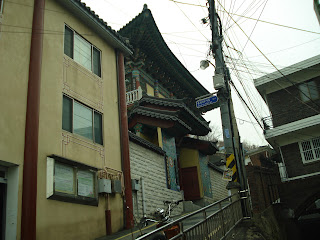
The last place I visited was Myogaksa Temple(see above pictures). Myogaksa Temple is located on the east side of Mt. Naksan in Seoul. First established by Monk Taeheo Hongseon in May of 1930, it has since expanded and underwent two renovations. The temple’s location was selected based on the principles of Feng Shui, which dictated that a temple built in its location would bring peace and comfort to Seoul’s residents. The Myogaksa Temple complex on Mt. Naksan accommodates a Deabul (Grand Buddha) Shrine, a Wontong Buddhist shrine, a Nakga preaching hall, Seokgulam Grotto, Sanshingak (Mountain Spirit Pavilion), and the Mae Buddha Statue. Deabul and Wontong shrines are two of the finest Buddhist architectural masterpieces. The Buddha statue, located inside the Seokgulam Grotto, was built around the ninth or early tenth century and has been designated a national cultural treasure. The Mae Buddha Statue, also located in this temple, was carved out of the rocky cliffs of Mt. Naksan and has been designated a cultural asset of the City of Seoul.
Since the 2002 FIFA World Cup when Myogaksa began operating its temple stay program, the temple has become a wonderful place where locals and tourists can escape the daily hustle-and-bustle of Seoul to experience the serenity of Buddhism. The rest of the pictures of Myogaksa Temple can be found on Facebook.
CHOENAN DUDE
Gilsangsa became a Zen Buddhist temple in 1995 so it is a relatively new temple. During the 1960's and the 1970's the building that is now the temple was a Yejeong. A Yejeong is a high class Korean style restaurant where politicians and military generals went to be entertained by Gisaeng (Korean geisha). The name of this particular Yejeong was Daewongak and was owned by the late Kim Yeong-han. She was a devote Buddhist and donated her land and restaurant in 1987 to Monk Pubjeong. Monk Pub Jeong was a zen master who decided to turn the restaurant into a place of worship. Monk Pub Jeong passed away at the temple on March 11, 2010 from lung cancer at age 78.
Although the temple only has a short history, it has done a lot to help local community and to help and to raise funds for the disabled, hungry children, poor children around the world, along with North Korean refugees. Programs are available which Koreans and foreigners can join. Programs include Buddhist education, meditation classes or short temple stays. The rest of the pictures of Gilsangsa can be found on Facebook.
The second place I visited was Seoul Iris Garden (see above pictures) which is also known as Seoul Botanical Garden located in the northern part of Seoul between Dobangsan and Suraksan mountains. It was opened June 7, 2009 and is a place I might venture back to see in the summer as the last of November is not exactly the best time to visit a botanical garden. The rest of the pictures from Seoul Iris Garden can be found on Facebook.
The last place I visited was Myogaksa Temple(see above pictures). Myogaksa Temple is located on the east side of Mt. Naksan in Seoul. First established by Monk Taeheo Hongseon in May of 1930, it has since expanded and underwent two renovations. The temple’s location was selected based on the principles of Feng Shui, which dictated that a temple built in its location would bring peace and comfort to Seoul’s residents. The Myogaksa Temple complex on Mt. Naksan accommodates a Deabul (Grand Buddha) Shrine, a Wontong Buddhist shrine, a Nakga preaching hall, Seokgulam Grotto, Sanshingak (Mountain Spirit Pavilion), and the Mae Buddha Statue. Deabul and Wontong shrines are two of the finest Buddhist architectural masterpieces. The Buddha statue, located inside the Seokgulam Grotto, was built around the ninth or early tenth century and has been designated a national cultural treasure. The Mae Buddha Statue, also located in this temple, was carved out of the rocky cliffs of Mt. Naksan and has been designated a cultural asset of the City of Seoul.
Since the 2002 FIFA World Cup when Myogaksa began operating its temple stay program, the temple has become a wonderful place where locals and tourists can escape the daily hustle-and-bustle of Seoul to experience the serenity of Buddhism. The rest of the pictures of Myogaksa Temple can be found on Facebook.
CHOENAN DUDE
Saturday, November 19, 2011
63 Building Seoul
On Saturday morning I made the trip to Seoul to check out the 63 Building which is also known as Yuksam Building. It was given the name 63 building because it is supposed to be 63 stories tall but it is actually only 60 stories tall as three of its stories are underground. When it was first constructed it was the tallest building in Seoul but there are now two taller buildings in Seoul, the 69 story Mokdong Hyperion in Yangcheon and the 73 story Tower Story in Gangnam. The 63 Building stands out not just because of its size but its exterior gold color. It was a cloudy day today in Seoul this morning so I did not bother to check out the observation deck on the top floor which apparently has outstanding views of Seoul and helps to give you an appreciation of just how big Seoul is.
The two biggest attractions within the building are the 63 Wax Museum and the 63 Aquarium. There is also a Sky Art Museum and an IMAX theater so maybe I'll go back and check those out some other time when I go back to check out the observation deck hopefully on a sunnier day.
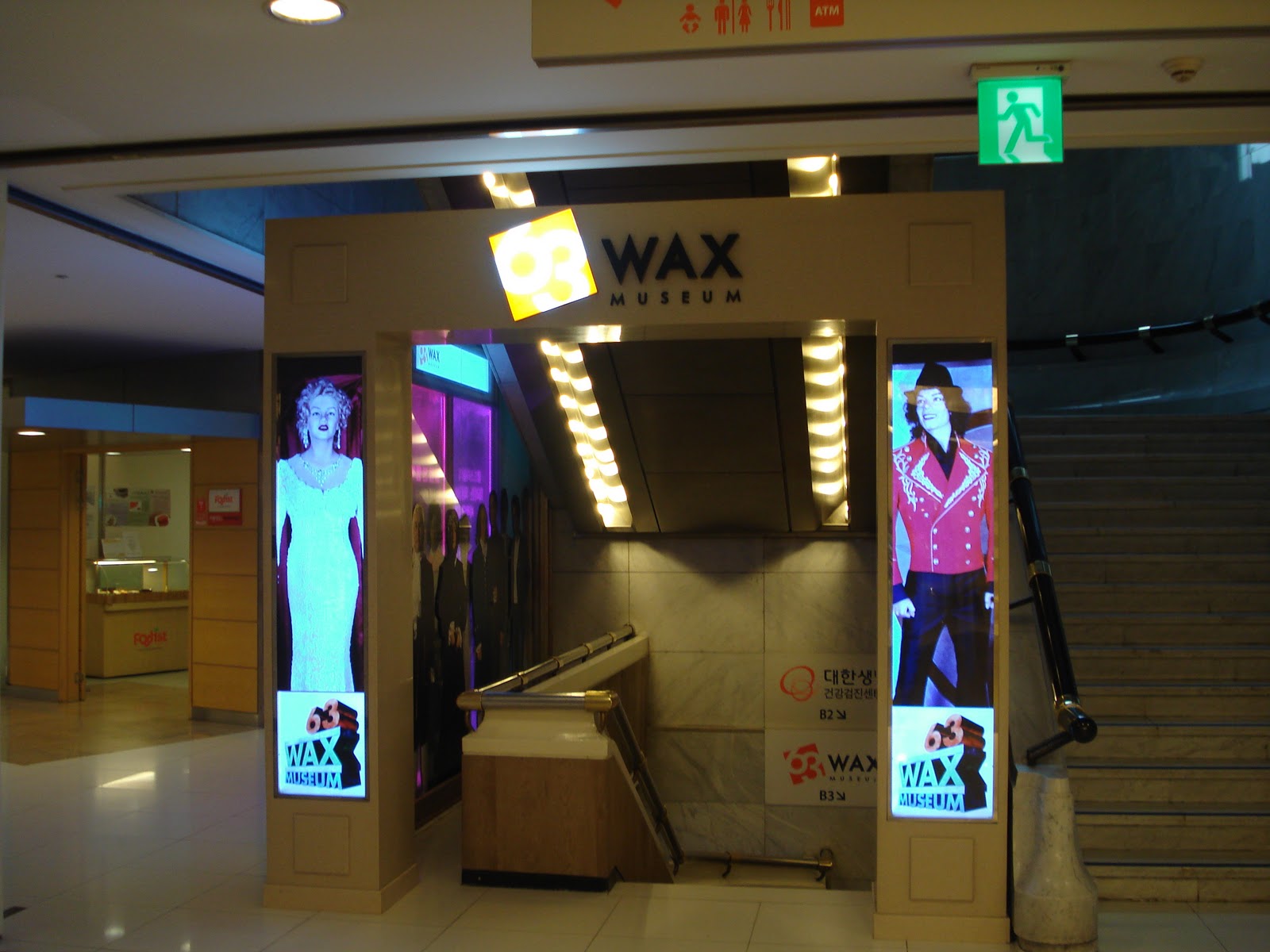
The 63 Wax Museum was a bit pricey at 13,000 won but it's worth checking out once if you're looking for something rather unique to check out in Seoul beyond just palaces and temples. I'm not sure where else you could go in Korea to see Queen Elizabeth, Tiger Woods, President Obama, and James Dean all at the same time! The rest of the pictures can be found on Facebook.
The 63 Aquarium was a little more expensive at 15,000 won. This was actually the first large scale aquarium built in Korea, but it really doesn't compare to a lot of the more recent aquariums that have been built over the last few years especially the one built in Busan. The rest of the pictures of the aquarium can be found on Facebook.
CHOENAN DUDE
Subscribe to:
Posts (Atom)